
Direct answer: This science briefing is about physics tools, health evidence, living systems and space evidence. The useful way to read it is not as a pile of disconnected discoveries, but as a map of decisions: what should be trusted, what still needs evidence, what must be governed and what ordinary readers should watch next.
For OngChowFatt.com readers, the value is practical. Frontier science is not only for labs and policy rooms. It eventually shows up as products, regulations, medical choices, climate costs, security updates, school rules, family conversations and business infrastructure. A good briefing helps you notice the pattern before it becomes a purchase, a risk or a habit.
The story in one sentence
The common thread is that physics tools, health evidence and living systems are moving faster than the institutions, interfaces and everyday routines that have to absorb them.
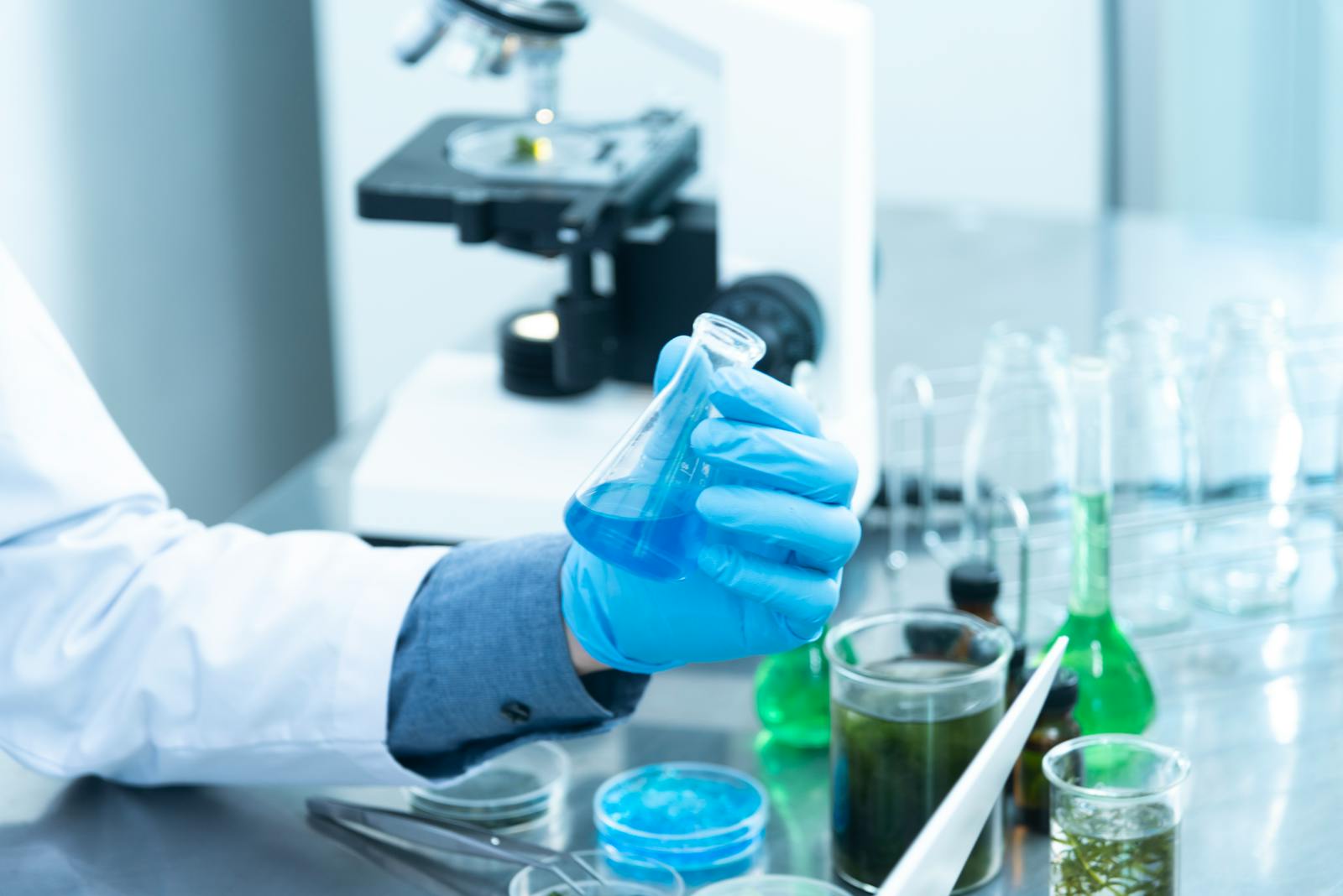
That gap between capability and readiness is where most mistakes happen. A discovery can be real and still not be ready for deployment. A tool can be powerful and still need better checks. A risk can be visible years before anyone budgets for it. Reading science well means staying inside that gap long enough to ask better questions.
Precision science changes the questions we can ask
The physics thread is easy to underestimate because the applications are not always visible at first. Better clocks, better sensors, better materials, better detectors and better models usually sound abstract until they become part of navigation, telecommunications, medicine, manufacturing or security.

The useful reading habit is to ask what a new measurement makes possible. Does it let researchers test an old theory more tightly? Does it expose a signal that used to be noise? Does it make a device smaller, cheaper or more stable? Does it create a standard that other tools can build on? That is where frontier physics quietly turns into infrastructure.
For operators, the lesson is patience. Some of the most important technologies do not arrive as shiny products. They arrive as improvements to the background layer: timing, calibration, sensing, simulation and standards. When that layer improves, whole industries can change without most customers knowing where the change began.
Health breakthroughs still have to survive translation
The health and biology thread is where hope needs the most discipline. A new mechanism, gene signal, diagnostic clue or treatment idea can be genuinely important without being immediately useful for patients. The difficult work sits between discovery and daily care.
Readers should watch the translation path. Does the finding explain a mechanism? Has it been reproduced? Does it apply to one subgroup or many? Is the effect large enough to matter outside a lab? Could the same idea improve diagnosis, prevention, triage or treatment? These questions protect readers from treating every biological clue as a cure.
The practical lesson is not cynicism. It is sequencing. Good science creates better questions first, then better tests, then better decisions and eventually better treatments. Families and clinicians still need care systems, screening, lifestyle support, mental health support and honest communication while the research pipeline does its slow work.
Nature stories are about relationships
The nature thread is a reminder that living systems rarely behave like isolated parts. Animals, plants, microbes, weather, food webs and landscapes create feedback loops. A discovery about one species often points to a wider pattern of adaptation, pressure, cooperation or collapse.
That matters for technology readers because engineering often borrows metaphors from nature while ignoring context. A biological trick works because it sits inside an environment with constraints. Evolution optimises locally, not perfectly. Ecosystems reward balance, redundancy and timing in ways that simple efficiency metrics can miss.
The practical lesson is to look for dependencies. Which species needs which habitat? Which behaviour appears only under pressure? Which fossil or genetic clue changes the timeline? Which human activity changes the background conditions? The more you ask those questions, the more ecology becomes a way to think about systems in general.
Space stories teach caution with beautiful data
The space thread is not only about distant objects. It is about interpretation under uncertainty. Telescopes, probes and detectors produce signals that must be cleaned, compared and argued over before they become a stable story about planets, galaxies, stars or the early universe.
That process is useful beyond astronomy. Many fields now live with the same problem: too much data, too many models and too much temptation to overclaim. The best space science is patient. It separates signal from artefact, looks for independent confirmation and accepts that a beautiful image can still hide a difficult measurement problem.
For readers, the practical takeaway is humility. The universe is a useful antidote to dashboard thinking. Not every measurement is immediate, not every pattern is causal and not every new instrument gives simple answers. But when the evidence converges, it can change the scale of what humans think is possible.
How to read this briefing like an operator
Start with the control points. Who decides what the system does? Who checks the evidence? Who benefits if the idea scales? Who carries the downside if the model, instrument, policy or treatment fails? These questions sound simple, but they cut through a surprising amount of hype.
Then separate three layers: the discovery, the deployment path and the maintenance burden. The discovery is the exciting part. The deployment path is where money, regulation, incentives and usability appear. The maintenance burden is what remains after the launch: updates, monitoring, training, repair, public trust and accountability.
That structure works across almost every science topic. A new health clue needs clinical translation. A climate idea needs governance and measurement. A physics tool needs standards and manufacturing. A digital safety feature needs usable defaults and appeal paths. A space observation needs confirmation. A nature discovery needs ecological context.
What I would watch next
First, watch physics tools for evidence quality. The loudest claim is rarely the most useful one. The better signal is whether independent groups can test it, whether the measurement is stable and whether the result changes decisions outside a narrow lab setting.
Second, watch health evidence for governance. The questions that matter are often boring: who pays, who audits, who updates the rules, who gets harmed by mistakes and who has enough authority to stop a bad deployment before it becomes normal.
Third, watch living systems for infrastructure. Many important changes arrive through standards, sensors, databases, manufacturing processes, medical protocols, school policies or security updates. They do not always look like breakthroughs, but they decide whether a breakthrough becomes useful.
The business lesson hiding inside the science
The practical lesson is to build earlier questions into your normal work. If you run a small company, manage a website, buy devices, advise a family or follow public technology, you do not need to become a specialist in every field. You need a repeatable way to decide what deserves attention.
Use this rule: if a scientific development changes cost, trust, timing, safety, privacy, energy, health or regulation, it can eventually matter to ordinary operations. That is true even when the first version looks remote. Quantum standards become software updates. Climate signals become insurance and food prices. Biology becomes screening and care decisions. AI becomes workflow and liability. Space and physics become sensors, navigation and materials.
The best readers are not the ones who memorise the most facts. They are the ones who keep a clean map of dependencies. What must be true for this idea to work? What would break if it scaled? What does it make cheaper or faster? What does it make harder to govern? Those questions are where useful foresight begins.
Questions to keep
- What is being measured better than before? Better measurement often appears before a market or policy change.
- Where did judgement move? If a machine, protocol or institution makes more of the decision, the review point must move too.
- What cost was invisible? Many science stories become important when they reveal a hidden cost in health, climate, security or attention.
- What has to be maintained? The real world punishes tools that launch cleanly but age badly.
FAQ
Is this a full technical report? No. It is an original science briefing designed for practical readers who want the signal, the risk and the next questions.
Why group physics tools with health evidence? Because frontier topics often share the same operating problem: evidence arrives before society has finished deciding how to use it safely.
What should a normal reader do with this? Keep the questions, not the noise. Watch for verification, governance, maintenance and second-order effects.
Source note: Public background sources include NIST, CERN, APS and WHO.
The extra operator point is this: do not treat a dated science briefing as a prediction market. Treat it as a way to rehearse decisions before they become urgent. If the physics tools signal grows, what would you monitor? If the health evidence risk becomes practical, who would need to act? If the living systems story turns into a product, what would you check before trusting it? That habit is more valuable than pretending any single article can settle the future.
The extra operator point is this: do not treat a dated science briefing as a prediction market. Treat it as a way to rehearse decisions before they become urgent. If the physics tools signal grows, what would you monitor? If the health evidence risk becomes practical, who would need to act? If the living systems story turns into a product, what would you check before trusting it? That habit is more valuable than pretending any single article can settle the future.