Direct answer: This science briefing connects three decisions we can no longer postpone: how much autonomy machines should have in war, how seriously governments should treat overlooked climate pollutants, and what new precision tools such as nuclear clocks may reveal about reality itself. Use this guide as a practical map of what to pay attention to.
This is an independent science briefing for OngChowFatt.com readers who want the operator version: what is the signal, what is the risk, and what should a normal technology-minded person watch next?
The story in one sentence
The common thread is speed. Autonomous weapons compress the time between sensing and killing. Climate side effects accumulate faster than policy can notice them. Better clocks measure nature so precisely that old assumptions about time, matter and navigation become testable. AI companions and phone safety tools move social behaviour into software before parents, schools and regulators have a stable playbook.
That is why this topic cluster feels less like a random bundle of science stories and more like a warning about thresholds. Many of the technologies here are not waiting for perfect theory or perfect regulation. They are already entering battlefields, labs, app stores, climate models and family life. The useful question is no longer whether they are interesting. The useful question is whether we have enough human judgement around them.
Start with autonomous weapons
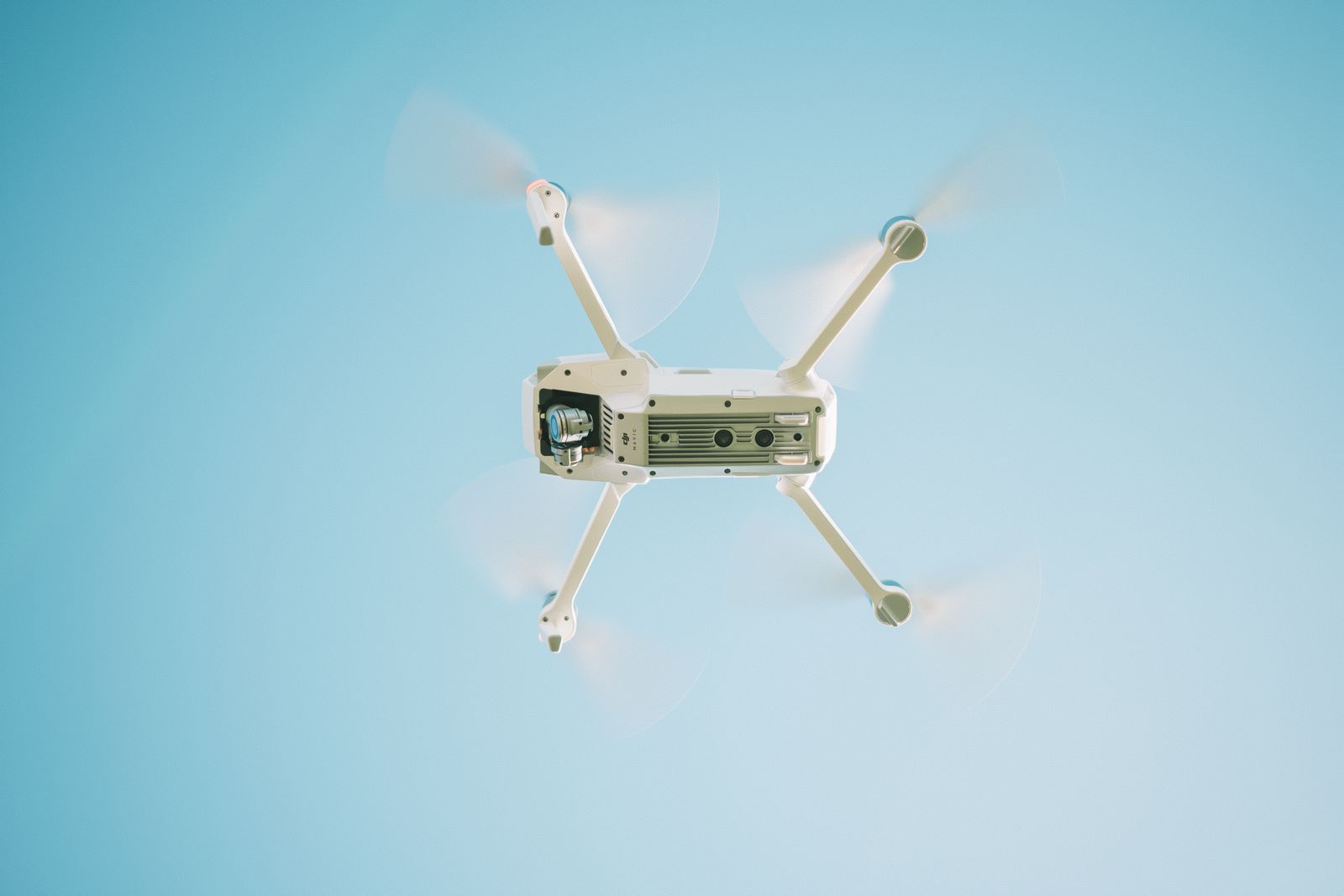
The strongest public-interest theme is autonomous weaponry. The public debate highlights fully autonomous drones, battlefield automation and the broader question of machines replacing soldiers. That topic deserves first position because it turns AI from a productivity story into an accountability story.

The International Committee of the Red Cross has been blunt about the concern: weapons that select and engage targets without human intervention create legal, ethical and humanitarian problems, and humans must keep control over life-and-death decisions. The ICRC is not arguing about science fiction. It is responding to weapon systems being developed and deployed across air, land and sea.
For a reader in Malaysia, Singapore or anywhere outside the defence-policy bubble, the practical lesson is this: autonomy is not one feature. It is a chain of choices. A drone may be human-launched, software-guided, sensor-triggered and only loosely supervised. Each step can make the system faster, but each step can also make blame harder to locate when something goes wrong.
That is the part business and technology people should notice. The same pattern appears in non-military AI: fraud detection, loan screening, hiring filters, content moderation, medical triage and school surveillance. Once a system can act before a person understands the case, the governance problem changes. The question becomes: where is the human checkpoint, and does it happen early enough to matter?
The climate story is about what policy misses
The climate angle in this issue is also about blind spots. Readers tend to know carbon dioxide and methane. Fewer people track the gases and reactions that influence warming indirectly, or pollutants that sit awkwardly between air-quality policy and climate policy.
UNEP has been warning that nitrous oxide deserves far more attention. It is less familiar than carbon dioxide, but UNEP describes it as a super-pollutant that both warms the planet and damages the stratospheric ozone layer. UNEP also notes that human-made nitrous oxide emissions have been heavily tied to agriculture, with fertilizer use a major driver.
That is the policy lesson: the climate system does not care which ministry owns a spreadsheet. A pollutant can be an agriculture problem, an industry problem, a public-health problem and a climate problem at the same time. If governments optimize only for the categories they already measure well, they will miss important leverage points.
For readers who buy gadgets, run small businesses or follow AI infrastructure, this matters because every new technology story now has an energy and emissions shadow. Data centres, food systems, logistics, fertilizer, mining, chips and batteries are not separate from climate policy. They are part of the same operating system.
Nuclear clocks make time feel practical again
Another standout theme is the nuclear clock. This is the kind of physics story that sounds abstract until you remember how much of modern life depends on time: GPS, banking, internet synchronization, telecom networks, satellites, navigation and scientific measurement.
NIST explains the basic idea clearly: atomic clocks keep time using changes in electrons, while a nuclear clock would use changes inside the atom's nucleus. Because the nucleus is less disturbed by outside electromagnetic noise, nuclear clocks could eventually become more precise and more stable than today's best atomic clocks.
The exciting part is not only a better clock. NIST says this kind of precision could improve navigation and communication, and could also help test fundamental physics, including questions about dark matter or whether constants of nature are truly constant. That is a big claim, but it is not hype in the usual startup sense. It is a reminder that measurement tools often create new industries before anyone knows what the final application will be.
There is a simple operator lesson here: infrastructure breakthroughs usually look boring at first. Better clocks, better sensors, better batteries, better lasers, better standards and better cables rarely make the loudest launch videos. Then, quietly, they become the reason whole categories of products can exist.
AI companions are not just an app category
The same pattern also points toward the human side of AI: companionship, social friction, child safety and the way phones mediate private life. That is where the science becomes uncomfortably close to daily routine.
AI companions are usually sold as a comfort technology. They are always available, patient, flattering and responsive. That can make them useful for practice, reflection or low-stakes conversation. It can also make them a poor replacement for the awkward but necessary work of dealing with real people.
This is not an argument to panic about every chatbot. It is an argument to stop pretending that interface design is neutral. If a system is built to keep attention, remember emotional details and simulate care, then the product is not just answering prompts. It is shaping habits. For teenagers, lonely adults and people under stress, that difference matters.
The same applies to device safety. When companies try to stop children from sharing explicit images, they are not simply adding a feature. They are deciding where scanning happens, what counts as risky content, how much privacy families give up, and what happens when a false positive appears. Good safety design is never just a toggle.
How to read this topic
Read the issue with four questions in mind.
- Where did human judgement move? Did software replace a decision, speed it up, or hide it behind an interface?
- What is being measured for the first time? Better measurement often changes what society can regulate, sell or prove.
- What cost was previously invisible? That cost may be climate damage, mental-health pressure, security risk or accountability.
- Who benefits if the system scales? The answer is not always the same as who carries the risk.
Those questions make the article more useful than a list of headlines. They turn science reading into pattern recognition. The pattern in this issue is that advanced technology is moving from tools we use into environments we live inside.
What I would watch next
First, watch the international debate over autonomous weapons. If governments cannot agree on human control in military systems, civilian AI regulation will also struggle, because both debates are about speed, accountability and delegation.
Second, watch climate policy broaden beyond the familiar carbon conversation. The next serious gains may come from pollutants, industrial processes and food-system choices that are less visible to the public but highly consequential.
Third, watch precision measurement. Nuclear clocks may sound niche today, but the history of technology says that better measurement often arrives before the killer application. GPS, fibre networks and chip manufacturing all depend on measurement discipline that most consumers never see.
Fourth, watch social AI. The big question is not whether chatbots can sound warm. They already can. The question is whether people, schools, families and platforms can build boundaries before simulated companionship becomes the default answer to loneliness.
FAQ
Is this a summary of one source? No. It is an original science briefing based on public background sources and practical analysis.
Why focus on autonomous weapons first? Because that topic makes the governance problem clearest. If a system can select and engage targets without meaningful human control, speed becomes a moral and legal risk.
Why include nuclear clocks in a practical tech blog? Because timekeeping underpins navigation, finance, internet infrastructure and scientific discovery. Better clocks can become invisible infrastructure for future products.
What should normal readers take away? Follow the control points. For each new technology, ask who decides, who verifies, who benefits and who is harmed if the system fails.
Source note: Public background sources include ICRC, NIST and UNEP.